

Accelerate to discover
Technologies
Type of the news
Brands


































Integrated IP-MS and Optoproteomics Reveal Dynamic Remodeling of Protein Interaction Networks
Combining IP-MS with Syncell optoproteomics reveals how the NLRP3 inflammasome dynamically reorganizes its protein interaction network and identifies a novel regulatory mechanism.
2026-07-13
mRNA vaccine immunity is enhanced by hepatocyte detargeting and not dependent on dendritic cell expression
mRNA vaccine efficacy is enhanced by preventing expression in hepatocytes rather than promoting it in dendritic cells. The findings highlight tissue-specific targeting as a potential strategy for improving vaccines and cancer immunotherapies.
2026-06-05

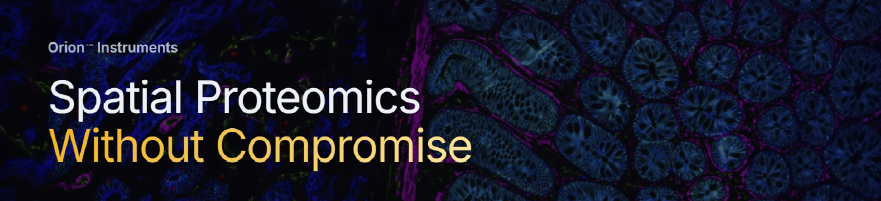
Introducing Orion HT
The New Standard for Spatial Biomarker Development in Translational and Clinical Research
2026-04-20
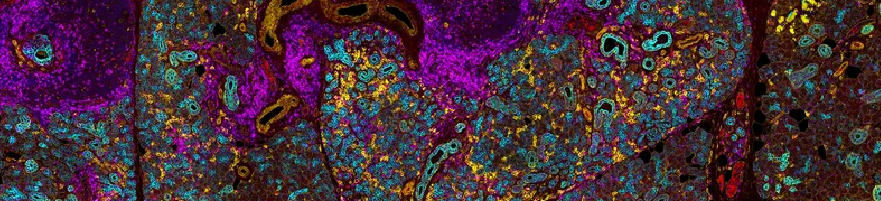
Molecular and Spatial Drivers of Immunotherapy Response in Mucosal Melanoma
Findings suggest that distinct genomic features, tumor states, and microenvironments differentiate ICB response and progression in MM, highlighting key tumor-intrinsic and microenvironmental factors associated with prognosis.
2026-03-18

Comparing Microscoop with Proximity Labeling Techniques APEX2 and BioID
Discover how Microscoop, APEX2, and BioID offer unique advantages for mapping protein-protein interactions—whether in fixed tissue or live cells. Learn which method fits your proteomics research best!
2026-02-23

Low-Cost Small Molecules to Replace bFGF
Low-Cost Small Molecules to Replace bFGF, Enabling Stable and Scalable Cell Growth Benefitting R&D and Industrial Application
2026-02-04
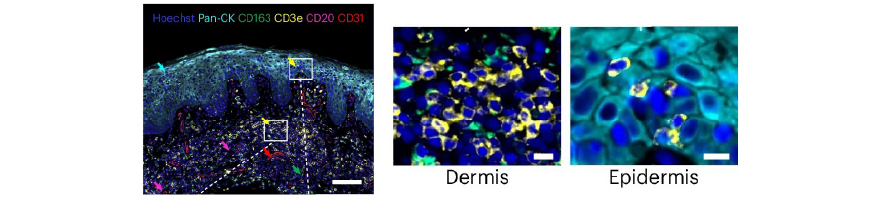
Cutaneous T cell lymphoma atlas reveals malignant TH2 cells supported by a B cell-rich tumor microen
The study provides a high-resolution atlas of cutaneous T cell lymphoma, identifying that malignant cells resemble TH2 cells. It highlights how a B cell-rich microenvironment supports tumor growth, offering new targets for therapy.
2026-05-04
PHF19 drives the formation of PRC2 clusters to enhance motility in TNBC cells
Polycomb repressive complex 2 (PRC2) is a key regulator of transcriptional repression and chromatin organization, essential in development and disease. While its enzymatic activity is well characterized, the factors governing PRC2 subnuclear organization, particularly in cancer cells, are largely unknown. Here, the researchers integrate in situ subcellular proteomics, high-resolution imaging, and functional genomics to investigate […]
2026-04-14

Whole genome analysis and in vivo safety assessment of probiotic candidate Lactobacillus acidophilus
Probiotics, particularly strains of lactic acid bacteria (LAB), are recognized for their beneficial effects on gut health. Lactobacillus acidophilus L177, a promising probiotic strain isolated from canine feces, was evaluated for safety and probiotic.
2026-03-10
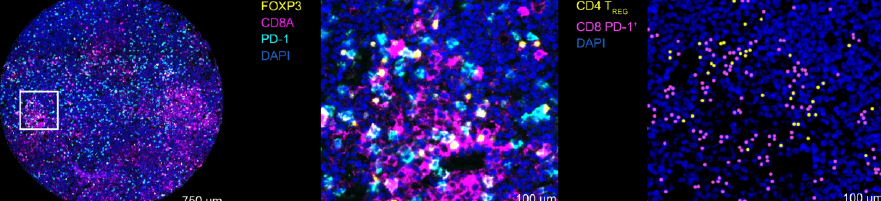
Integrative multi-omics reveals a regulatory and exhausted T-cell landscape in CLL
T-cell exhaustion contributes to immunotherapy failure in chronic lymphocytic leukemia (CLL). T cells from CLL patients' blood, bone marrow, and lymph nodes were analyzed using single-cell RNA sequencing, mass cytometry, and tissue imaging.
2026-02-12

RareCyte Spatial Biology – Immunofluorescence imaging workshop at Masaryk University, Brno
Join ACCELA and RareCyte for this special Spatial Biology - Immunofluorescence imaging workshop at Masaryk University, CAMPUS Bohunice, Meeting room in E24 (Biologypark), Studentská 812/6, Brno, Czech Republic. Monday, February 9, 2026, 9 AM.
2026-01-30

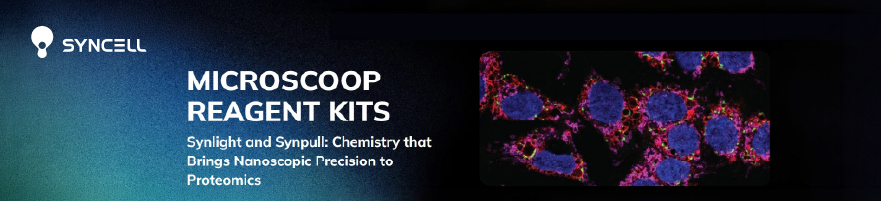
Introducing Synlight-Pure — Ultra-High Precision Photolabeling for Nanoscopic Proteomic Discovery
The webinar is demonstrating how microscopy-guided, patterned light activation enables protein purification directly from visually defined subcellular structures.
2026-04-22
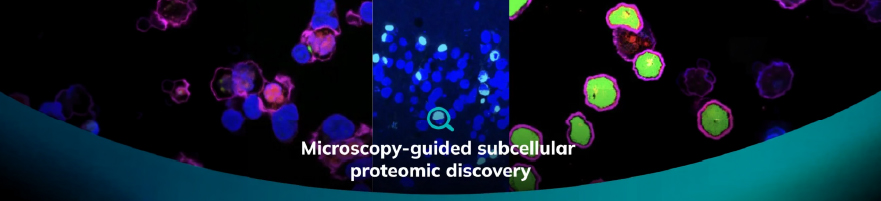
Microscopy-guided subcellular proteomic discovery by high-speed ultra-content photo-biotinylation
Syncell developed a method combining microscopy, photo-biotinylation, and mass spectrometry, enabling high-resolution mapping of proteins in subcellular regions, accelerating discoveries in spatial proteomics research.
2026-03-23

Introducing IVM-FS: Real-Time Cellular Insightsinto Rats and Other Medium-Sized Animals
Rats are increasingly valued for intravital imaging due to their larger body size and organ systems, which enable more precise surgical preparation, stable window implantation, and repeated long-term imaging - advantages over mice.
2026-03-03

Metabolomic fingerprints of PAH exposure – identifying toxicological biomarkers in dynamic culture
This study not only highlights the use of spheroids for mechanistic toxicological studies but also provides a framework for identifying potential metabolic biomarkers of PAH exposure. Use of ClinoStar for hepatic HepG2 spheroids made the difference !
2026-02-05
BioFocus newsletter
Register to receive Brand new technology development, Important product updates, Interesting scientific events and more!

Technologies