


With Benchtop Microfluidic Cell Sorting, NanoCellect is committed to empowering every scientist to make discoveries one cell at a time.
Accelerate to discover
Back to filter
Related topics


Harnessing the WOLF Cell Sorter for Cutting‑Edge Senescence Research
With advancing age, neurovascular dysfunction manifests as impaired neurovascular coupling (NVC), microvascular rarefaction, and blood–brain barrier (BBB) disruption, contributing to vascular cognitive impairment (VCI). Our previous research established a causal link between vascular senescence induced cerebromicrovascular dysfunction and cognitive decline in accelerated aging models. The present study examines whether chronological aging promotes endothelial senescence, adversely affecting neurovascular health, and whether senolytic therapies can enhance neurovascular function and cognitive performance in aged mice. We used transgenic p16-3MR mice to identify and eliminate senescent cells and employed genetic (ganciclovir) and pharmacological (ABT263/Navitoclax) senolytic approaches. Evaluations included spatial memory performance, NVC responses, cortical microvascular density, BBB permeability, and detection of senescent endothelial cells via flow cytometry. Brain endothelial cells exhibited heightened sensitivity to aging-induced senescence, undergoing senescence at a greater rate and earlier than other brain cell types, particularly during middle age. This microvascular endothelial cell senescence was associated with NVC dysfunction, microvascular rarefaction, BBB disruption, and deteriorating cognitive performance. On the other hand, senolytic treatments in aged mice improved NVC responses, BBB integrity, microvascular density, and learning capabilities. Notably, these findings suggest that the most effective time window for senolytic treatment is in middle-aged mice, where early intervention could better prevent neurovascular dysfunction and mitigate age-related cognitive impairment.
How the WOLF was used in this study
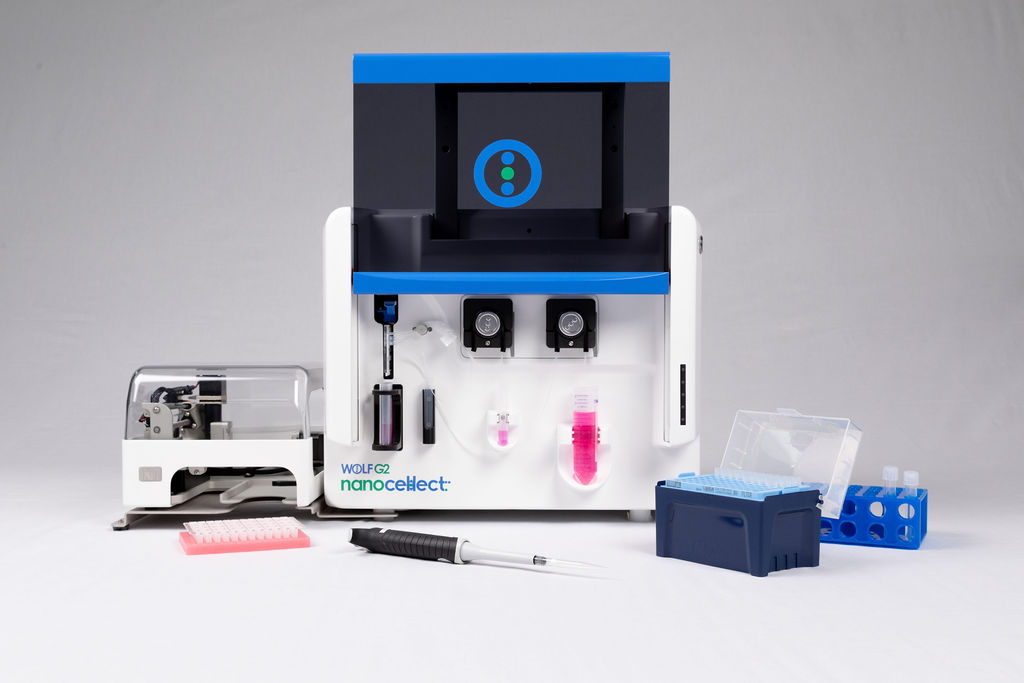
In the Aging Cell article (DOI: 10.1111/acel.70048), the authors used the WOLF Cell Sorter (NanoCellect) as part of their preparation of brain-derived single-cell suspensions for downstream molecular analysis. After tissue digestion and debris removal, they stained cells to identify live cells and then applied the WOLF Cell Sorter to perform low-pressure fluorescent activated cell sorting (FACS), efficiently removing dead cells and cellular debris to enrich the sample for viable, high-quality single cells. This enriched cell population was critical for preserving cell integrity ahead of transcriptomic sequencing and related analyses, ensuring that the resulting data reflect healthy, intact cells suitable for transcriptome profiling.
Related technologies: Harnessing the WOLF Cell Sorter for Cutting‑Edge Senescence Research
Related products
BioFocus newsletter
Register to receive Brand new technology development, Important product updates, Interesting scientific events and more!

Technologies